

Stéphane MAURY
Professor of Plant Physiology and Epigenetics
University of Orléans | P2E Laboratory (Plant Physiology, Ecology, Environment, UR1207 – USC1328 INRAE)
📧 stephane.maury@univ-orleans.fr | ORCID: 0000-0003-0481-0847
Profile
Professor of Plant Physiology at the University of Orléans, Stéphane Maury has been investigating epigenetic mechanisms underlying developmental plasticity and plant adaptation to environmental change for over 25 years. Trained at CNRS IBMP (Strasbourg) and holder of an HDR since 2006, he bridges molecular biology, epigenomics and ecophysiology in forest trees and crop species.
He leads the ARCHE team within the P2E laboratory (University of Orléans – INRAE), and formerly served as deputy head of the LBLGC lab (2008-2021). He coordinates the ANR projects EPITREE (2018-2023) and EPIMYC (2024-2028), co-leads the PEPR ADAAPT (2025-2030) national programme, and is a member of the INRAE ECODIV Scientific Council.
His research focuses on:
environmental memory and phenotypic plasticity in trees (poplar, maritime pine, …);
the role of DNA methylation and chromatin structure in plant–fungus interactions;
multi-omics integration (epigenome, transcriptome, phenotype) to decode adaptation;
development of epigenetic biomarkers and predictive models for forestry and agroecology.
He participates in several European COST Actions (EPI-CATCH, COPYTREE, EPICROPS) and international collaborations with Portugal, the Czech Republic, Canada and Spain.
Author of over 70 peer-reviewed papers (New Phytologist, Plant Physiology, J. Exp. Botany, Frontiers in Plant Science …), he co-edited Épigénétique: mécanismes moléculaires et réponses à l’environnement (Quae 2024, Roberval Award 2025) and Epigenetics in Ecology and Evolution (ISTE 2025).
Actively engaged in education (Master MEEF-SVT programme) and science outreach, he regularly contributes to public events and media on plant epigenetics and climate adaptation.
Research: Epigenetics and Forest Adaptation to Climate Change by Stéphane Maury (University of Orléans, P2E Laboratory, INRAE ECODIV department)
Forest ecosystems are among the most affected by global change, which impacts their health, regeneration capacity, and ability to provide key ecosystem services. Trees — long-lived, sessile organisms — cannot escape environmental or biotic disturbances. Their survival depends on their adaptive capacity, which relies on two complementary mechanisms: phenotypic plasticity and genetic evolution (Figure 1).
Epigenetics: a lever of flexibility and adaptive memory
Epigenetics refers to heritable yet reversible modifications in gene expression that do not alter the DNA sequence. These molecular regulations — involving DNA methylation, histone modifications, and small RNAs — are key drivers of phenotypic plasticity and stress memory.
In trees such as poplar, oak, or spruce, studies have revealed an epigenetic mosaicism within individuals: different organs or tissues carry distinct signatures depending on their developmental stage, position, or stress history (Figure 2). These marks can be transmitted mitotically (within the individual) or meiotically (to offspring), leading to priming and environmental memory phenomena (Figures 3 and 4).
From cells to populations: multi-scale variability
At the population level, epigenetic diversity complements or compensates for genetic diversity. It helps explain differences in local adaptation or drought tolerance between genetically identical individuals, especially in clonal species. This diversity represents a novel resource for forest genetic conservation and management (Figure 5).
Toward sustainable and resilient forestry
Epigenetic mechanisms open new perspectives for forestry:
selection of epivariants or epi-markers to predict resilience and performance;
controlled thermal or water priming during micropropagation;
production of epigenetically “primed” somatic embryos better adapted to climate constraints;
integration of epigenomics into predictive, multi-omics frameworks for tree breeding and management.
These approaches pave the way toward adaptive forest management, promoting the conservation of genetic resources, the establishment of “epigenetically prepared” clone parks or seed orchards, and the development of climate-resilient forestry.
Related Figures from Maury, S. & Plomion, C. (2025). Chapter 8. Epigenetics and climate change: the example of forest ecosystems. In C. Grunau & S. Maury (Eds.), Epigenetics in Ecology and Evolution (pp. 207 240). ISTE Group / Wiley. DOI : 10.1002/9781394372683
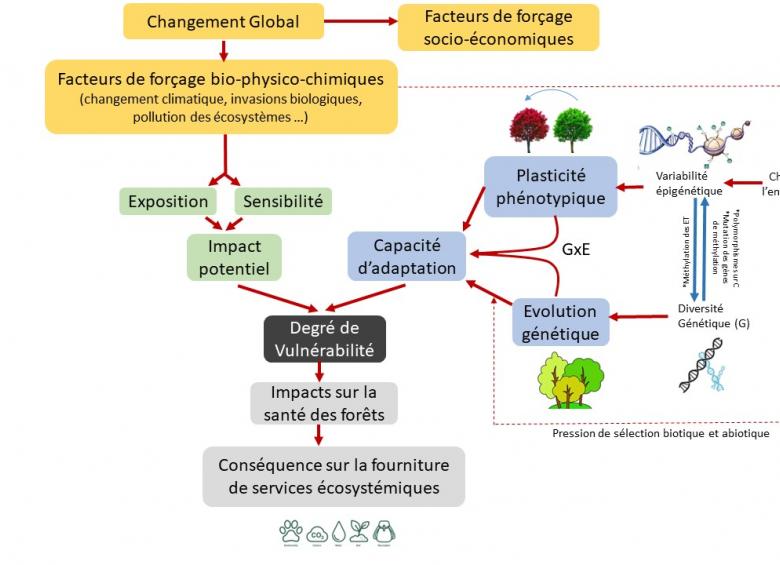
Figure 1 : Conceptual framework linking global change, vulnerability, and forest adaptation.
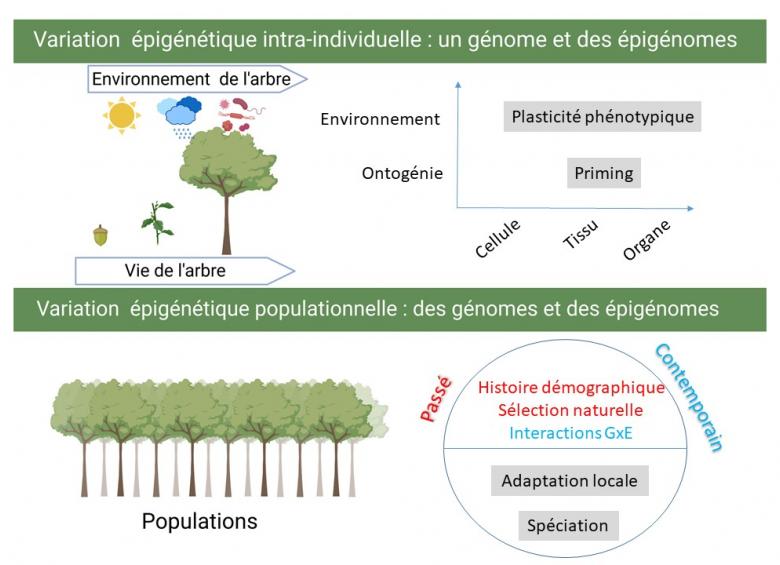
Figure 2 : Intra- and inter-individual epigenetic variation in trees.
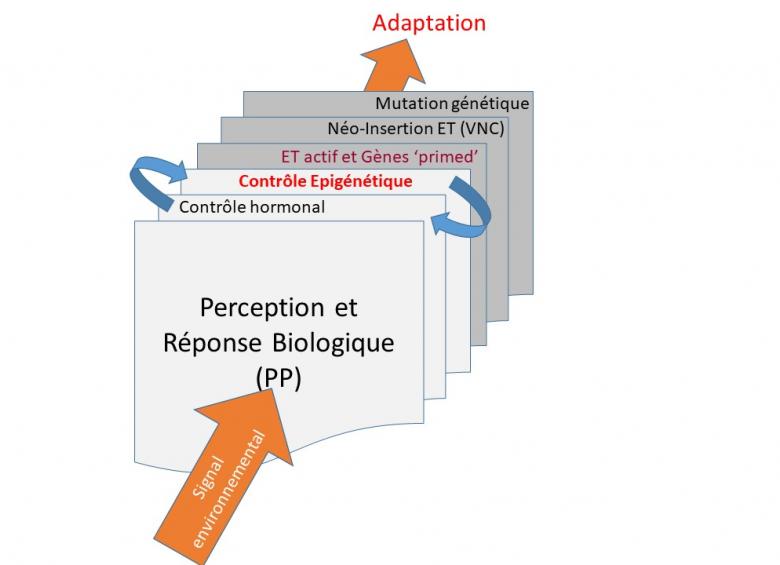
Figure 3 : Causal chain from environmental signal to hormonal and epigenetic regulation.

Figure 4 : Role of DNA methylation in drought tolerance and epigenetic memory.
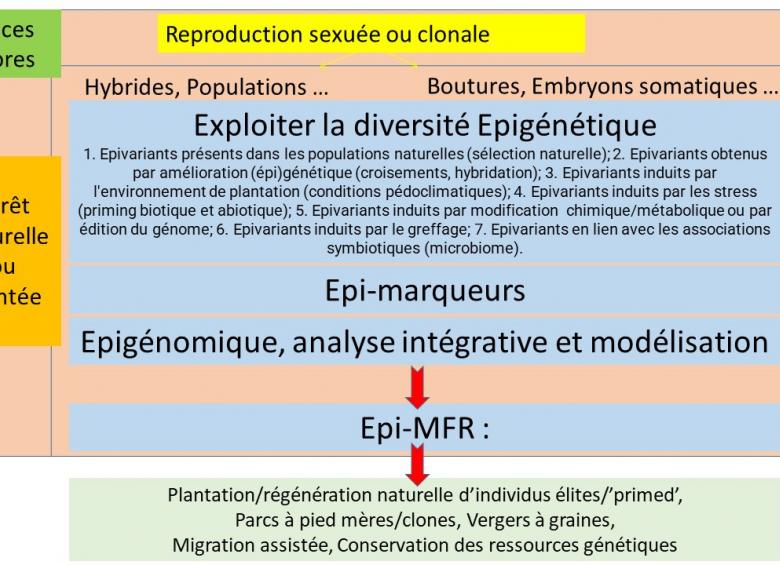
Figure 5 : Harnessing epigenetic diversity for the management of forest reproductive material (Epi-MFR).
To illustrate this work, here are five examples:
In Le Gac et al. (2018; ANR SYLVABIOM project), we demonstrated that poplar trees retain an epigenetic environmental memory (DNA methylation) in their shoot apical meristem across seasons (from winter to spring). See the press release on this article in the Appendix.
• Le Gac A. L., Lafon-Placette C., Chauveau D., Segura V., Delaunay A., Fichot R., Marron N., Le Jan I., Berthelot A., Bodineau G., Bastien J. C., Brignolas F., Maury S. (2018). Winter dormant shoot apical meristem in poplar trees shows environmental epigenetic memory. Journal of Experimental Botany, 69: 4821–4837. https://doi.org/10.1093/jxb/ery271
In Sow et al. (2021; ANR EPITREE project), we showed that DNA methylation regulates the hormonal response to drought and also maintains genome stability in the poplar shoot apical meristem. We notably identified active transposable elements capable of generating mutations after drought exposure. See the press release in the Appendix.
• Sow M. D., Le Gac A. L., Fichot R., Lanciano S., Delaunay A., Le Jan I., Lesage-Descauses M. C., Citerne S., Caius J., Brunaud V., Soubigou-Taconnat L., Cochard H., Segura V., Chaparro C., Grunau C., Daviaud C., Tost J., Brignolas F., Strauss S. H., Mirouze M., Maury S. (2021). RNAi suppression of DNA methylation affects the drought stress response and genome integrity in transgenic poplar. New Phytologist, 232: 80–97. https://doi.org/10.1111/nph.17555
In Vigneaud et al. (2023; basis of the ANR EPIMYC project), we demonstrated for the first time that DNA methylation controls the mycorrhizal capacity of poplar. Candidate genes were identified in both the tree and the mutualistic fungus that may regulate this interaction. See the press release in the Appendix.
• Vigneaud J., Kohler A., Sow M. D., Delaunay A., Fauchery L., Guinet F., Daviaud C., Barry K. W., Keymanesh K., Johnson J., Singan V., Grigoriev I. V., Fichot R., Conde D., Perales M., Tost J., Martin F., Allona I., Strauss S., Veneault-Fourrey C., Maury S. (2023). DNA hypomethylation of the host tree impairs interaction with mutualistic ectomycorrhizal fungus. New Phytologist, 238: 2561–2577. https://doi.org/10.1111/nph.18734
In Trontin et al. (2025; Région Centre project INTEMPERIES), we reported for the first time a post-embryonic epigenetic memory lasting two years after thermal priming of maritime pine somatic embryos. Candidate genes potentially involved in this memory were identified in the tree. See the press release in the Appendix.
• Trontin J.-F., Sow M. D., Delaunay A., Modesto I., Teyssier C., Reymond I., Canlet F., Boizot N., Le Metté C., Gibert A., Chaparro C., Daviaud C., Tost J., Miguel C., Lelu-Walter M.-A., Maury S. (2025). Epigenetic memory of temperature sensed during somatic embryo maturation in 2-yr-old maritime pine trees. Plant Physiology, 197(2), kiae600. https://doi.org/10.1093/plphys/kiae600
Finally, in the review by Brunel-Muguet et al. (2025; European COST Action EPICATCH), an international consortium summarizes promising epigenetic strategies for improving seed production and crop resilience in the seed industry.
• Brunel-Muguet S., Baránek M., Fragkostefanakis S., Sauvage C., Lieberman-Lazarovich M., Maury S., Kaiserli E., Segal N., Testillano P. S., Verdier J. (2025). Maternal environmental effects and climate-smart seeds: unlocking epigenetic inheritance for crop innovation in the seed industry. The Plant Journal, 123: e70407. https://doi.org/10.1111/tpj.70407
Press & Public Outreach — Epigenetics and Trees (S. MAURY)
Media, press, and institutional communications
INRAE (2018) — Pioneering research on drought memory in trees. Press release. Available at: https://www.inrae.fr/actualites/travaux-pionniers-memoire-secheresse-arbres (published Sept. 19, 2018) — INRAE
University of Orléans (2024) — Spotlight on epigenetics. Web article. Available at: https://www.univ-orleans.fr/fr/p2e/zoom-sur/lepigenetique-lhonneur (accessed today) — Université d’Orléans
Radio Campus Tours – La Méridienne – INRAE – Stéphane Maury, EPITREE (2021) — Podcast. Available at: https://www.radiocampustours.com/emissions/la-meridienne-inrae-stephane-maury-projet-epitree/ (accessed today) — radiocampustours.com
Canal U (2023) — Climate change, trees, and epigenetics. Video. Available at: https://www.canal-u.tv/chaines/canal-uved/changement-climatique-arbres-et-epigenetique (accessed today) — Canal-U
INRAE (2021) — Epigenetics, a new lever… Press release. Available at: https://www.inrae.fr/actualites/lepigenetique-nouveau-levier-ameliorer-tolerance-secheresse-arbres — INRAE
University of Lille (2023) — What is the point of studying epigenetic mechanisms in plants? Interview with S. Maury (University of Orléans / INRAE) as part of the Lille University WebTV conferences.
Available at: https://webtv.univ-lille.fr/video/9286/quel-interet-d%E2%80%99etudier-les-mecanismes-epigenetiques-chez-les-plantes-MOOC FUN (2023) — Trees: from forest to city, from genome to ecosystem. MOOC coordinated by INRAE, with participation from S. Maury (University of Orléans / INRAE).
https://www.fun-mooc.fr/fr/cours/arbres/
Seminar: Epigenetics and trees — Supplement to the MOOC “Trees.” Video presentation by S. Maury. YouTube (2023)
https://www.youtube.com/watch?v=mRNmfWTGaZI
Epigenetic Memory in Maritime Pine
INRAE (2024) — Maritime pine seeds retain memory of temperature changes.
Associated publication: Plant Physiology (Trontin J-F et al., 2024, https://doi.org/10.1093/plphys/kiae600)
Read at inrae.frLibération (Olivier Monod, Nov. 21, 2024) — Forestry: Scorched seed, stronger future pine.
Read at liberation.frFrance Inter – La Terre au carré (Mathieu Vidard & Olivier Monod, Nov. 21, 2024) — Thursday News Roundup – Nov. 21, 2024.
Listen at radiofrance.frSciences et Avenir (Loïc Chauveau, Nov. 22, 2024) — Discovery: Maritime pine seeds have memory.
Read at sciencesetavenir.frScience & Vie (Romain Fouchard, Aug. 3, 2021) — Drought: Understanding tree response via epigenetics.
Covers research on poplar epigenetic response to water stress at University of Orléans and INRAE.
Read at science-et-vie.comEpsiloon (Jean-Baptiste Veyrieras, July 2021) — A tree is not an individual, but a colony.
Feature on genetic and epigenetic mosaicism in trees. S. Maury quote: “The genetic plasticity of trees is an asset in facing climate change.”
https://www.epsiloon.com/tous-les-numeros/n1/
Epigenetics and Tree–Fungus Symbiosis
INRAE (2023) — Tree–fungus symbiosis: the key role of epigenetics.
Associated publication: New Phytologist (Vigneaud J et al., 2023, https://doi.org/10.1111/nph.18734)
https://www.inrae.fr/actualites/symbiose-arbres-champignons-decouverte-du-role-lepigenetiquePour la Science (Isabelle Bellin, May 2023) — Epigenetics enters the tree–fungus symbiosis story.
Popular article from issue #547, presenting work by the INRAE-Orléans / Lorraine consortium.
https://www.pourlascience.fr/sd/biologie/l-epigenetique-se-mele-de-la-symbiose-entre-les-arbres-et-les-champignons-25008.phpAPBG Nantes (2023) — Conference: Epigenetics and the symbiosis between trees and fungi. Lecture by S. Maury, University of Orléans / INRAE, organized by the Association of Biology and Geology Professors (APBG), Dec. 13, 2023.
Available at: https://nantes.apbg.org/2023/10/21/13-decembre-2023-conference-lepigenetique-et-la-symbiose-entre-les-arbres-et-les-champignons/
Outreach & Recognition
Roberval Prize 2025 (official selection) — Epigenetics: Molecular Mechanisms, Developmental Biology and Environmental Responses (Jammes H., Boudry P. & Maury S., eds., Éditions Quae, 2024).
Category: Higher Education.
Official Roberval Prize press release.
For a more detailed resume, you can download the file below: