

PAHPA ICE : Physical Activity and Health, Pluridisciplinarity Approach in ICE (Isolated, Confined Environment)
This research program, bringing together multiple disciplines and scientific fields (physiology, psychology, cognitive sciences, nutrition, neurosciences, ergonomics, physical activity), is supported by the French Polar Institute Paul-Émile Victor (IPEV) and the European Space Agency (ESA).
The multidisciplinary polar project PAHPA ICE involves 6 SAPRéM researchers and questions the challenges of health construction in extreme environments.
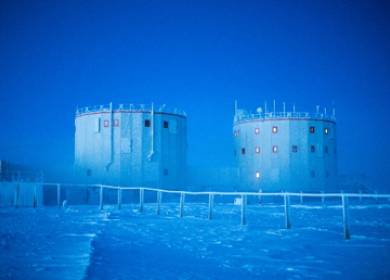
This project has been conducted for 3.5 years at the French–Italian Antarctic station Concordia and focuses on how humans and their activities adapt to extreme conditions during overwintering missions. Antarctica is the most hostile continent in the world: the coldest, the driest, and the windiest. The station is located at an altitude of 3,600 m, placing individuals in hypoxic conditions. The aim of the research program is to understand how the physical and psychological body adapts to these extreme conditions, and in particular whether the “third-quarter phenomenon” exists. The literature characterizes this phenomenon by irritability, heightened anxiety and bad mood, feelings of depression, and an increase in deviant behaviors during the third quarter of the mission (Betchel & Berning, 1991). It may be a response to long-term isolation. This phenomenon has been observed in polar expeditions, space missions, and among submariners. The ultimate goal of the project is to offer, in the long term, the implementation of specific physical activity programs to counter the emergence of this phenomenon during overwintering.
Members involved in the project: Aude Villemain (PI), Katia Collomp (CIAMS), Karine Paret (ERCAE), Fabrice Prieur, Nancy Rebot-Vibarel, Nathalie Rieth, Sandrine Schiano-Lomoriello, Maud Miguet.
Contact: Aude Villemain (aude.villemain@univ-orleans.fr)